---
title: 5 Mistakes to Avoid When Choosing Fire-Resistant Gloves
description: In the emergency response and rescue sector, firefighting gloves are one of the most critical items of Personal Protective Equipment (PPE). During firefighting and rescue operations, the hands are the primary working tool and, at the same time, one of the body parts most exposed to extreme hazards.
image: https://info.covalsafety.com/hubfs/000-10-04-BLOGPOST-VIGILI-DEL-FUOCO.jpg
---

- PRODUCTS
- [Heat – Heat resistant and Industry](https://www.covalsafety.com/en/heat/)
- [Fire – Fire fighters](https://www.covalsafety.com/en/fire/)
- [Weld – Welding MMA, MIG, TIG](https://www.covalsafety.com/en/weld/)
- [Cold – Anti-cold and Cryogeny](https://www.covalsafety.com/en/cold/)
- [Food – Oven and Kitchen](https://www.covalsafety.com/en/food/)
- [Other PPE](https://www.covalsafety.com/en/other-ppe/)
- [COMPANY](https://www.covalsafety.com/en/company/)
- [SAFETY MAGAZINE](https://info.covalsafety.com/en/safety-magazine)
- [EDUCATION](https://www.covalsafety.com/en/education/)
- [BECOME A DEALER](https://www.covalsafety.com/en/become-a-dealer/)
- [SHOP](https://www.shopsicurezza.shop/)
- [CONTACT](https://www.covalsafety.com/en/contact/)
- [English](https://info.covalsafety.com/en/safety-magazine/5-mistakes-to-avoid-when-choosing-fire-resistant-gloves)
- [Français](https://info.covalsafety.com/fr/safety-magazine/5-erreurs-à-éviter-lors-du-choix-dun-gant-de-protection-incendie)
- [Italiano](https://info.covalsafety.com/safety-magazine/5-errori-da-evitare-nella-scelta-di-un-guanto-antincendio)
English
# 5 Mistakes to Avoid When Choosing Fire-Resistant Gloves
Pubblicato da [Martina Pieropan](https://info.covalsafety.com/en/safety-magazine/author/martina-pieropan) 10 September 2026 6 minuti per leggere
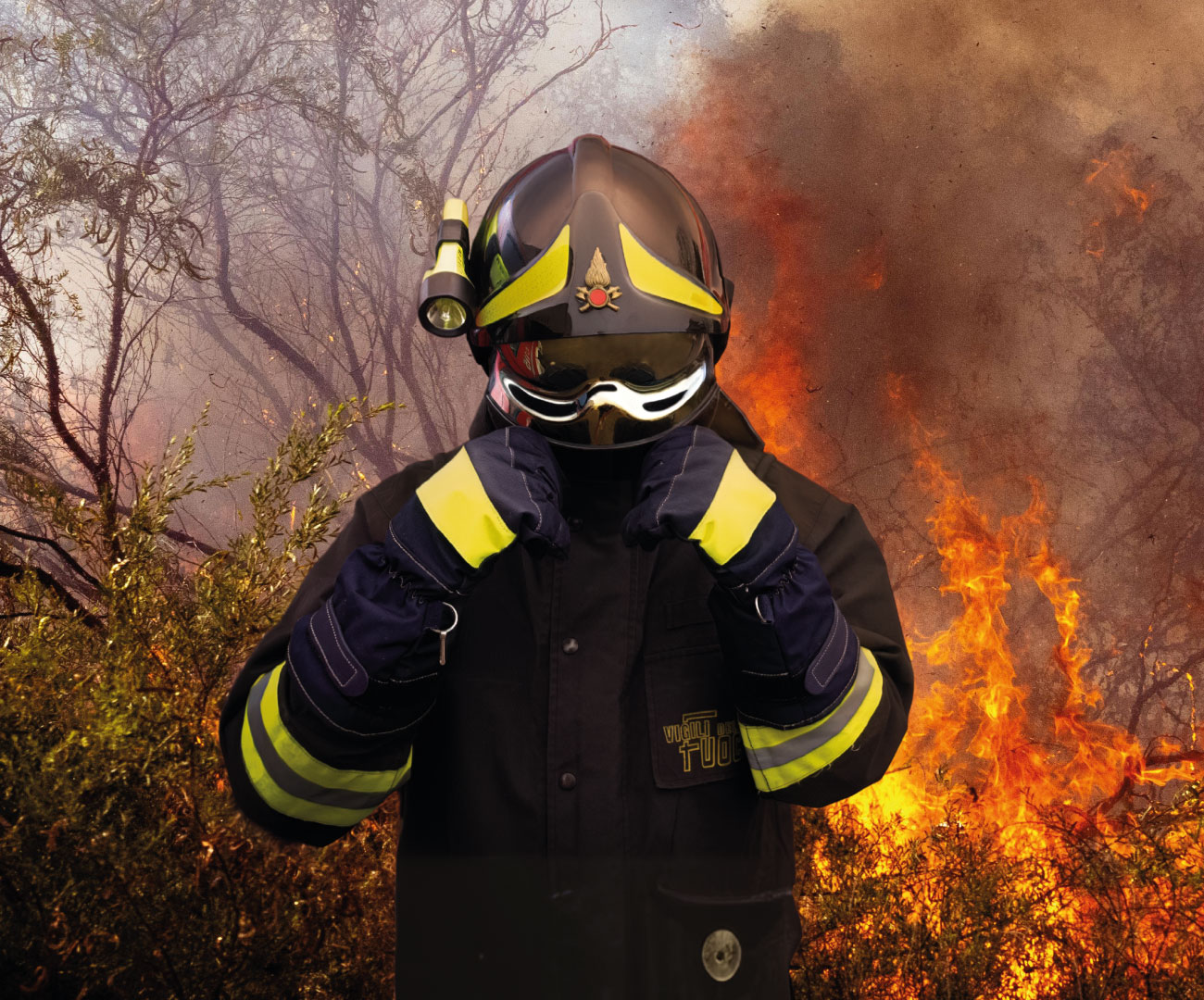
In the emergency response and rescue sector, firefighting gloves are one of the most critical items of Personal Protective Equipment (PPE). During firefighting and rescue operations, the hands are the primary working tool and, at the same time, one of the body parts most exposed to extreme hazards.
Choosing the wrong firefighting gloves can expose operators to burns, serious injuries, and accidents that may compromise the entire operation. Yet the selection of equipment for Fire Brigades, Civil Protection teams, or company emergency response units is often based on misconceptions or incomplete criteria.
Here is an in-depth analysis of the **5 critical mistakes to avoid**, together with the technical solutions needed to make the right choice—targeted, effective, and compliant with European regulations.
## 1. Underestimating Mechanical Risks: Focusing Only on Heat
**The mistake:**
**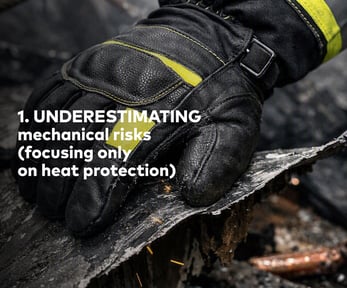**The most common mistake is to evaluate firefighting gloves solely on their ability to withstand flames and high temperatures. During rescue operations, however, hands work around twisted metal, broken glass, debris, and drums. A glove that protects against fire but tears or cuts at the first contact with a sharp surface is ultimately a failed piece of PPE.
**The solution:**
It is essential to ensure that the glove provides excellent combined protection. **EN 388 certification** should always be checked, as it verifies mechanical performance against abrasion, cutting, tearing, and puncture.
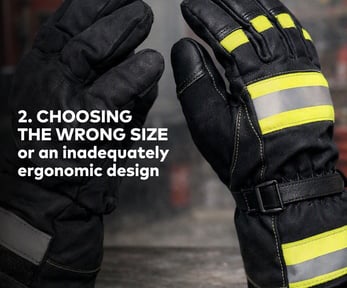
## 2. Choosing the Wrong Size or an Unergonomic Design
**The mistake:**
Choosing gloves that are too large, loose, or excessively rigid based on the assumption that greater thickness means greater safety. This approach reduces tactile sensitivity, making it difficult—or even impossible—to handle delicate equipment, while also increasing hand fatigue.
**The solution:**
A firefighting glove should fit like a second skin, following the natural movement and mechanics of the hand. It is advisable to rely on manufacturers offering a comprehensive range of sizes—from **6 to 12**—and using soft yet highly resistant leather, allowing operators to test their actual dexterity in the field.
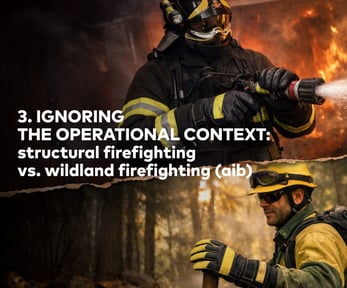
## 3. Ignoring the Operational Context: Structural Firefighting vs. Wildland Firefighting (AIB)
**The mistake:**
Using the same glove model for every scenario. Wearing a heavy structural firefighting glove designed for interior firefighting during **wildland firefighting (AIB)** operations can cause the hands to overheat prematurely and restrict movement during long hours of walking and fire-line operations. Conversely, using a lightweight glove in a structural firefighting scenario can expose operators to potentially life-threatening risks.
**The solution:**
The requirements of each operational environment must be clearly distinguished. Structural firefighting requires multilayer PPE with substantial thermal barriers. Wildland firefighting and Civil Protection activities, on the other hand, require lighter, more flexible, and highly breathable PPE, while still maintaining resistance to open flames and water repellency.
## 4. Overlooking Waterproofing and Liquid Protection
**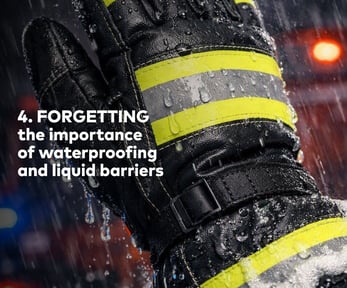The mistake:**
Ignoring the presence of a waterproof membrane. A glove that absorbs water, firefighting foam, or biological fluids can experience three immediate effects: a significant increase in weight, reduced thermal insulation, and the dangerous phenomenon known as **steam burns**. This occurs when water trapped inside the glove becomes heated and turns into scalding steam in contact with the skin.
**The solution:**
Make sure the glove incorporates breathable technical membranes that are completely waterproof to liquids and capable of keeping the hands dry, even during partial immersion or heavy rain.
## 5. Using Gloves That Are Not Certified to EN 659
**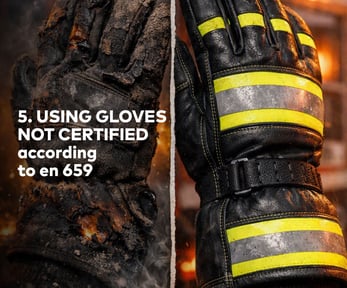The mistake:**
Purchasing generic work gloves marketed as “heat resistant” and using them for active firefighting operations. In rescue and firefighting applications, gloves are **Category III PPE**, designed to protect against risks that may cause serious or irreversible injury.
**The solution:**
For Fire Brigades and professional firefighting teams, compliance with **EN 659** is essential. This standard ensures that gloves have passed stringent tests for flame resistance, resistance to radiant heat and convective heat, thermal shrinkage, and resistance to the penetration of chemicals and water.
# Coval Safety Professional Solutions: The FLAME Range
To meet these demanding requirements in industrial and emergency response environments, the **[Coval Safety](https://www.covalsafety.com/en/) firefighting glove range** is manufactured exclusively using high-quality leather processed in Italy. Each glove undergoes strict quality controls and is entirely stitched with high-tenacity thread to ensure maximum resistance to tearing and extreme temperatures.
## FLAME – Ideal for Civil Protection and Wildland Firefighting (AIB)
Specifically designed for Civil Protection operators and personnel involved in wildland firefighting operations.
**Materials:** Made from meta-aramid fabric and premium water-repellent bovine full-grain leather.
**Safety Features:** Incorporates a protective reinforcement across the back of the hand at the knuckles, together with a vein-protection reinforcement at the lower palm. This provides an ideal balance between heat protection and operational flexibility.
## [FLAME AIB 659](https://www.covalsafety.com/en/fire/firefighter-gloves-flame-aib-659/) – The Standard for Firefighters and Firefighting Cabinets
The reference solution for Fire Brigades, company firefighting teams, and compliant safety equipment cabinets in industrial and corporate environments.
**Certification:** Fully compliant with the **EN 659 standard for firefighters**.
**Thermal Protection:** Equipped with a special inner thermal-insulation layer. The soft, water-repellent full-grain leather palm protects against liquid penetration without becoming rigid, while aramid-thread stitching ensures maximum PPE durability.
## [FLAME AIB 659 M](https://www.covalsafety.com/en/fire/firefighter-gloves-flame-aib-659-m/) – Maximum Protection with Waterproof Membrane and High Visibility
The top-of-the-range solution for the most complex and prolonged operations, where thermal comfort and waterproofing can make the difference between effective performance and injury.
**Advanced Construction:** Combines premium meta-aramid fabric on the back of the hand with a water-repellent full-grain leather palm. It features an aramid fabric lining combined with a waterproof and breathable membrane that keeps water and moisture out while allowing perspiration to escape.
**High-Visibility Safety:** Includes a high-visibility reflective band on the back of the hand for operations in low-light conditions or dense smoke, as well as structural reinforcements on the knuckles and lower palm.
# Choose Quality to Minimize Risk
Focusing solely on price or partial specifications when selecting firefighting gloves can expose companies and emergency response teams to serious operational risks. Choosing **Coval Safety material technology** means investing in reliable, durable PPE that fully complies with the most stringent European standards.
[**Explore our complete range of professional firefighting gloves.**](https://www.covalsafety.com/en/fire/)
[GET IN TOUCH WITH COVAL SAFETY FOR PERSONALIZED CONSULTATION](mailto:martina@ideecocco.com)
-
-
-
-
- [mailto:?subject='https://info.covalsafety.com/en/safety-magazine/5-mistakes-to-avoid-when-choosing-fire-resistant-gloves'](mailto:?subject='https://info.covalsafety.com/en/safety-magazine/5-mistakes-to-avoid-when-choosing-fire-resistant-gloves')
[Product selection guide](https://info.covalsafety.com/en/safety-magazine/tag/product-selection-guide), [FIRE](https://info.covalsafety.com/en/safety-magazine/tag/fire)
### [Martina Pieropan](https://info.covalsafety.com/en/safety-magazine/author/martina-pieropan)
### Latest posts
### Posts by Tag
- [Product selection guide (38)](https://info.covalsafety.com/en/safety-magazine/tag/product-selection-guide)
- [HEAT (9)](https://info.covalsafety.com/en/safety-magazine/tag/heat)
- [Materials (7)](https://info.covalsafety.com/en/safety-magazine/tag/materials)
- [FOOD (6)](https://info.covalsafety.com/en/safety-magazine/tag/food)
- [Coval (5)](https://info.covalsafety.com/en/safety-magazine/tag/coval)
- [Standards (5)](https://info.covalsafety.com/en/safety-magazine/tag/standards)
- [WELD (5)](https://info.covalsafety.com/en/safety-magazine/tag/weld)
- [FIRE (4)](https://info.covalsafety.com/en/safety-magazine/tag/fire)
- [Uncategorized (4)](https://info.covalsafety.com/en/safety-magazine/tag/uncategorized)
- [Guide alla scelta del prodotto (3)](https://info.covalsafety.com/en/safety-magazine/tag/guide-alla-scelta-del-prodotto)
- [Presentazione Prodotti (3)](https://info.covalsafety.com/en/safety-magazine/tag/presentazione-prodotti)
- [COLD (2)](https://info.covalsafety.com/en/safety-magazine/tag/cold)
- [Interview (2)](https://info.covalsafety.com/en/safety-magazine/tag/interview)
- [leather (2)](https://info.covalsafety.com/en/safety-magazine/tag/leather)
- [Test (1)](https://info.covalsafety.com/en/safety-magazine/tag/test)
- [tannery (1)](https://info.covalsafety.com/en/safety-magazine/tag/tannery)
See all
### Search
This is a search field with an auto-suggest feature attached.
- There are no suggestions because the search field is empty.
## Related posts
[](https://info.covalsafety.com/en/safety-magazine/en/heat-resistant-ppe-when-heat-in-the-kitchen-is-a-real-health-hazard?hsLang=en)
## [Heat-resistant PPE: when heat in the kitchen is a real health hazard](https://info.covalsafety.com/en/safety-magazine/en/heat-resistant-ppe-when-heat-in-the-kitchen-is-a-real-health-hazard?hsLang=en)
6 May 2023
[](https://info.covalsafety.com/en/safety-magazine/guide-to-different-firefighter-gloves?hsLang=en)
## [Guide To Different Firefighter Gloves](https://info.covalsafety.com/en/safety-magazine/guide-to-different-firefighter-gloves?hsLang=en)
10 April 2024
[](https://info.covalsafety.com/en/safety-magazine/en/radiant-or-contact-what-kind-of-heat-is-it-that-you-have-to-defend-yourself-against-at-work?hsLang=en)
## [Radiant or contact? What kind of heat is it that you have to defend yourself against at work?](https://info.covalsafety.com/en/safety-magazine/en/radiant-or-contact-what-kind-of-heat-is-it-that-you-have-to-defend-yourself-against-at-work?hsLang=en)
31 January 2023

Coval Safety is a brand of Idee Cocco Italia SRL
##### HEADQUARTER
P. IVA 00525590246
Via Spinino, 11/1
36050 Montorso Vicentino (VI)
Phone +39 0444 685220
+39 0444 484003
[info@covalsafety.com](mailto:info@covalsafety.com)


##### SITEMAP
- [Company](https://www.covalsafety.com/en/company/)
- [Products](https://www.covalsafety.com/en/products/)
- [Education](https://www.covalsafety.com/en/education/)
- [Coval Safety Magazine](https://info.covalsafety.com/en/safety-magazine)
- [Become a dealer](https://www.covalsafety.com/en/become-a-dealer/)
- [Contact](https://www.covalsafety.com/en/contact/)
##### SERVICES
- [Reserved Area](https://www.covalsafety.com/en/reserved-area/)
- [Privacy Policy](https://www.covalsafety.com/en/privacy-policy/)
- [Cookies Policy](https://www.covalsafety.com/en/cookies-policy/)
- [Copyright](https://www.covalsafety.com/en/copyright/)
- [Quality Policy](https://info.covalsafety.com/politica-qualita-aziendale)
##### FOLLOW US
```json
{
"@context" : "https://schema.org",
"@type" : "BlogPosting",
"author" : {
"@type" : "Person",
"name" : "Martina Pieropan",
"url" : "https://info.covalsafety.com/en/safety-magazine/author/martina-pieropan"
},
"dateModified" : "2026-09-10T10:03:20.640Z",
"datePublished" : "2026-09-10T10:03:08.000Z",
"headline" : "5 Mistakes to Avoid When Choosing Fire-Resistant Gloves",
"image" : [ "https://info.covalsafety.com/hubfs/000-10-04-BLOGPOST-VIGILI-DEL-FUOCO.jpg" ],
"mainEntityOfPage" : {
"@id" : "https://info.covalsafety.com/en/safety-magazine/5-mistakes-to-avoid-when-choosing-fire-resistant-gloves",
"@type" : "WebPage"
},
"publisher" : {
"@type" : "Organization",
"logo" : {
"@type" : "ImageObject",
"url" : "https://info.covalsafety.com/hubfs/LOGHI/coval_ufficiale_negativo.png"
},
"name" : "IDEE COCCO ITALIA SRL"
}
}
```
```json
{
"@context" : "http://schema.org",
"@type" : "BlogPosting",
"articleBody" : "In the emergency response and rescue sector, firefighting gloves are one of the most critical items of Personal Protective Equipment (PPE). During firefighting and rescue operations, the hands are the primary working tool and, at the same time, one of the body parts most exposed to extreme hazards. Choosing the wrong firefighting gloves can expose operators to burns, serious injuries, and accidents that may compromise the entire operation. Yet the selection of equipment for Fire Brigades, Civil Protection teams, or company emergency response units is often based on misconceptions or incomplete criteria. Here is an in-depth analysis of the 5 critical mistakes to avoid, together with the technical solutions needed to make the right choice—targeted, effective, and compliant with European regulations. 1. Underestimating Mechanical Risks: Focusing Only on Heat The mistake: The most common mistake is to evaluate firefighting gloves solely on their ability to withstand flames and high temperatures. During rescue operations, however, hands work around twisted metal, broken glass, debris, and drums. A glove that protects against fire but tears or cuts at the first contact with a sharp surface is ultimately a failed piece of PPE. The solution: It is essential to ensure that the glove provides excellent combined protection. EN 388 certification should always be checked, as it verifies mechanical performance against abrasion, cutting, tearing, and puncture. 2. Choosing the Wrong Size or an Unergonomic Design The mistake: Choosing gloves that are too large, loose, or excessively rigid based on the assumption that greater thickness means greater safety. This approach reduces tactile sensitivity, making it difficult—or even impossible—to handle delicate equipment, while also increasing hand fatigue. The solution: A firefighting glove should fit like a second skin, following the natural movement and mechanics of the hand. It is advisable to rely on manufacturers offering a comprehensive range of sizes—from 6 to 12—and using soft yet highly resistant leather, allowing operators to test their actual dexterity in the field. 3. Ignoring the Operational Context: Structural Firefighting vs. Wildland Firefighting (AIB) The mistake: Using the same glove model for every scenario. Wearing a heavy structural firefighting glove designed for interior firefighting during wildland firefighting (AIB) operations can cause the hands to overheat prematurely and restrict movement during long hours of walking and fire-line operations. Conversely, using a lightweight glove in a structural firefighting scenario can expose operators to potentially life-threatening risks. The solution: The requirements of each operational environment must be clearly distinguished. Structural firefighting requires multilayer PPE with substantial thermal barriers. Wildland firefighting and Civil Protection activities, on the other hand, require lighter, more flexible, and highly breathable PPE, while still maintaining resistance to open flames and water repellency. 4. Overlooking Waterproofing and Liquid Protection The mistake: Ignoring the presence of a waterproof membrane. A glove that absorbs water, firefighting foam, or biological fluids can experience three immediate effects: a significant increase in weight, reduced thermal insulation, and the dangerous phenomenon known as steam burns. This occurs when water trapped inside the glove becomes heated and turns into scalding steam in contact with the skin. The solution: Make sure the glove incorporates breathable technical membranes that are completely waterproof to liquids and capable of keeping the hands dry, even during partial immersion or heavy rain. 5. Using Gloves That Are Not Certified to EN 659 The mistake: Purchasing generic work gloves marketed as “heat resistant” and using them for active firefighting operations. In rescue and firefighting applications, gloves are Category III PPE, designed to protect against risks that may cause serious or irreversible injury. The solution: For Fire Brigades and professional firefighting teams, compliance with EN 659 is essential. This standard ensures that gloves have passed stringent tests for flame resistance, resistance to radiant heat and convective heat, thermal shrinkage, and resistance to the penetration of chemicals and water. Coval Safety Professional Solutions: The FLAME Range To meet these demanding requirements in industrial and emergency response environments, the Coval Safety firefighting glove range is manufactured exclusively using high-quality leather processed in Italy. Each glove undergoes strict quality controls and is entirely stitched with high-tenacity thread to ensure maximum resistance to tearing and extreme temperatures. FLAME – Ideal for Civil Protection and Wildland Firefighting (AIB) Specifically designed for Civil Protection operators and personnel involved in wildland firefighting operations. Materials: Made from meta-aramid fabric and premium water-repellent bovine full-grain leather. Safety Features: Incorporates a protective reinforcement across the back of the hand at the knuckles, together with a vein-protection reinforcement at the lower palm. This provides an ideal balance between heat protection and operational flexibility. FLAME AIB 659 – The Standard for Firefighters and Firefighting Cabinets The reference solution for Fire Brigades, company firefighting teams, and compliant safety equipment cabinets in industrial and corporate environments. Certification: Fully compliant with the EN 659 standard for firefighters. Thermal Protection: Equipped with a special inner thermal-insulation layer. The soft, water-repellent full-grain leather palm protects against liquid penetration without becoming rigid, while aramid-thread stitching ensures maximum PPE durability. FLAME AIB 659 M – Maximum Protection with Waterproof Membrane and High Visibility The top-of-the-range solution for the most complex and prolonged operations, where thermal comfort and waterproofing can make the difference between effective performance and injury. Advanced Construction: Combines premium meta-aramid fabric on the back of the hand with a water-repellent full-grain leather palm. It features an aramid fabric lining combined with a waterproof and breathable membrane that keeps water and moisture out while allowing perspiration to escape. High-Visibility Safety: Includes a high-visibility reflective band on the back of the hand for operations in low-light conditions or dense smoke, as well as structural reinforcements on the knuckles and lower palm. Choose Quality to Minimize Risk Focusing solely on price or partial specifications when selecting firefighting gloves can expose companies and emergency response teams to serious operational risks. Choosing Coval Safety material technology means investing in reliable, durable PPE that fully complies with the most stringent European standards. Explore our complete range of professional firefighting gloves.",
"author" : {
"@type" : "Person",
"name" : "Martina Pieropan",
"sameAs" : "",
"url" : "https://info.covalsafety.com/en/safety-magazine/author/martina-pieropan"
},
"dateModified" : "10/09/2026",
"datePublished" : "10/09/2026",
"headline" : "5 Mistakes to Avoid When Choosing Fire-Resistant Gloves",
"image" : {
"@type" : "ImageObject",
"height" : 400,
"url" : "https://27008376.fs1.hubspotusercontent-eu1.net/hubfs/27008376/000-10-04-BLOGPOST-VIGILI-DEL-FUOCO.jpg",
"width" : 750
},
"mainEntityOfPage" : "https://info.covalsafety.com/en/safety-magazine/5-mistakes-to-avoid-when-choosing-fire-resistant-gloves",
"publisher" : {
"@type" : "Organization",
"logo" : {
"@type" : "ImageObject",
"url" : "https://27008376.fs1.hubspotusercontent-eu1.net/hubfs/27008376/LOGHI/coval_ufficiale_negativo.png"
},
"name" : "Idee Cocco Italia srl",
"url" : "info.covalsafety.com"
}
}
```